Key Takeaways
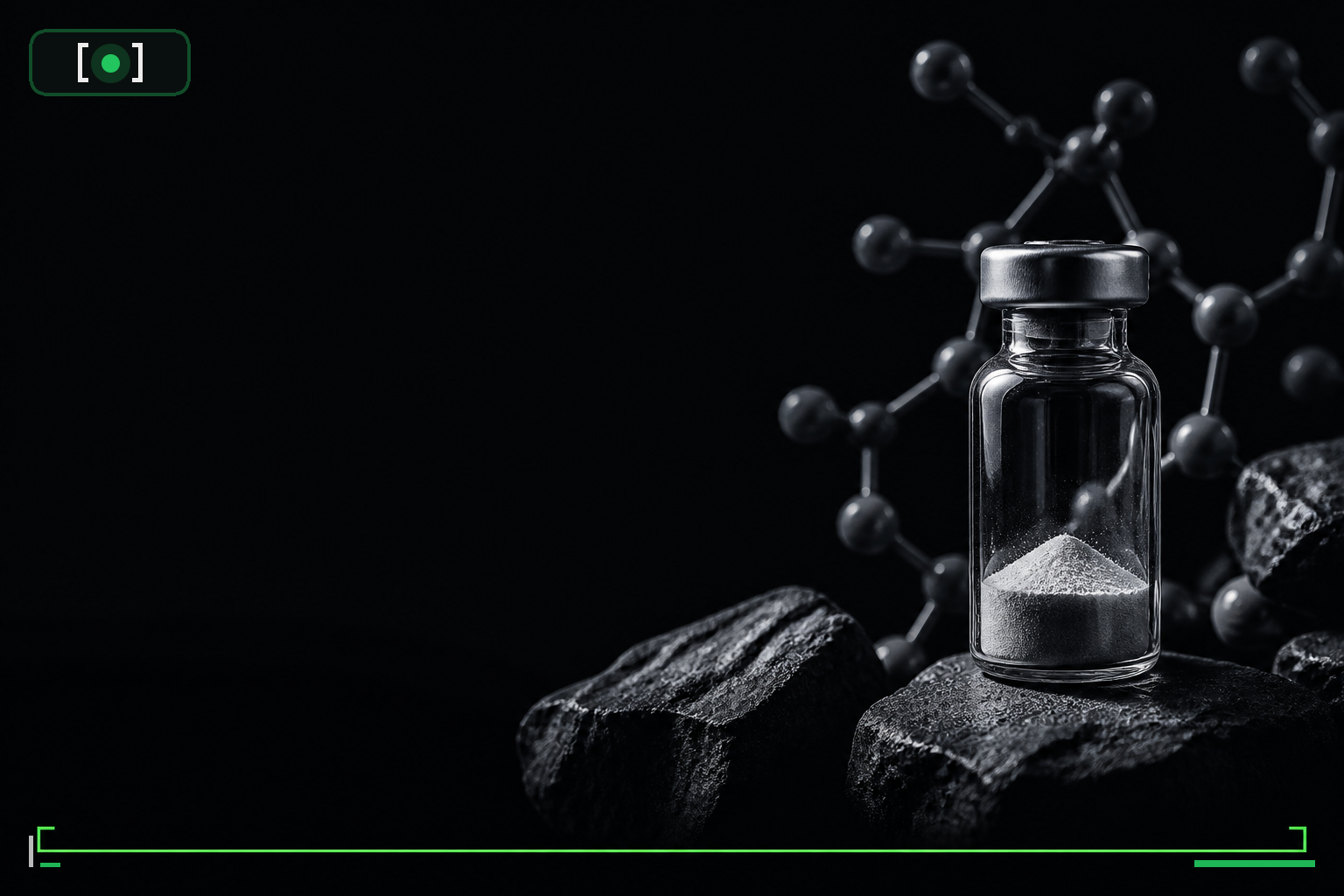
- BPC-157 is a synthetic pentadecapeptide derived from a protective sequence found in human gastric juice, most studied for its effects on soft-tissue repair.
- The recovery-focused evidence is dominated by animal models — tendons, ligaments, muscle, and gut lining — with human clinical data still limited and largely observational.
- Reported effects appear to hinge on angiogenesis, growth-factor upregulation, and modulation of the nitric oxide system rather than a single anabolic pathway.
- Dosing conventions circulating in the peptide community are extrapolated from rodent studies; there is no established human protocol validated by controlled trials.
- BPC-157 is not FDA-approved for human use, remains a research compound, and belongs in a physician-supervised context — not a self-directed recovery stack.
What BPC-157 actually is
BPC stands for Body Protection Compound. The molecule is a 15-amino-acid fragment isolated from a larger protein found in human gastric juice, first characterized in the 1990s by researchers in Zagreb. Unlike many peptides, BPC-157 appears stable in the acidic environment of the stomach, which is one reason oral and injectable routes are both explored in the literature.
For readers coming from our earlier mechanism overview at BPC-157 and the Mechanism Behind Accelerated Tissue Repair, this guide focuses on the recovery use case — how the compound is being studied in the context of tendon, ligament, muscle, and gut healing, and what that means for anyone reading claims online.
Why the recovery framing matters
Most public discussion frames BPC-157 as a general "healing peptide," but the research skews toward specific injury types: transected tendons, crushed muscles, and induced colitis in rodents. The generalization to human elective recovery — post-training soreness, joint aches, a nagging Achilles — is a leap the underlying studies do not directly support.
What the research actually shows
The published record is deep in animal models and thin in human trials. Rodent studies have reported accelerated closure of tendon transections, improved muscle regeneration after crush injury, and mucosal healing in models of inflammatory bowel disease. Reviews across 2019–2024 consistently describe consistent directional effects — but also consistently note the absence of adequately powered human trials.
The most cited proposed mechanisms include:
- Angiogenesis. BPC-157 appears to upregulate vascular endothelial growth factor receptor 2 (VEGFR2), improving perfusion at the injury site.
- Growth-factor modulation. Increased expression of tendon and fibroblast growth factors has been reported in tendon-healing models.
- Nitric oxide system interaction. The peptide seems to modulate NO signaling, which plays a role in vascular tone, inflammation resolution, and tissue remodeling.
- Gut-brain axis effects. Several studies report protective effects on gastric mucosa and dopaminergic signaling in rodent models of injury and stress.
None of this establishes clinical efficacy in humans. The gap between "does something interesting in rats" and "measurably shortens recovery in adults" is where honest evidence review lives.
Where BPC-157 is discussed most in recovery contexts
| Recovery scenario | Preclinical signal | Human data | Practical status |
|---|---|---|---|
| Tendon injury (Achilles, patellar) | Consistent in rat transection models | Case reports, no RCTs | Experimental |
| Muscle strain / crush injury | Positive in rodent models | None of quality | Experimental |
| Ligament repair (MCL, ACL adjunct) | Limited positive rodent data | None | Experimental |
| Gut / GI mucosal healing | Strongest preclinical signal | Small observational reports | Experimental |
| General soreness / overtraining | Not directly studied | None | Not supported |
The table is not an endorsement. It reflects what the literature discusses, not what has been proven in controlled human research.
Dosing conventions versus clinical evidence
Community sources often reference dosing in the 200–500 microgram per day range, sometimes split, sometimes at the site of injury, sometimes systemically. These figures come from rodent-study conversions using body-surface-area scaling — a method that produces rough estimates, not validated human doses.
Three points worth flagging:
- No regulatory body has published a human dosing guideline for BPC-157.
- Route of administration (subcutaneous, intramuscular, oral) affects bioavailability in ways that are still being characterized.
- Compounded products vary in purity, concentration, and stability; independent testing has repeatedly found label mismatches in the peptide supply chain.
Anyone reading a "protocol" online should treat it as extrapolation, not prescription. If you are considering BPC-157 in a clinical context, the honest starting point is a physician familiar with the current peptide regulation landscape and the compounding pharmacy channel.
Safety, unknowns, and what the reviews caution about
Short-term rodent studies report a favorable safety profile at the doses tested. That does not translate to safety guarantees in humans, especially at chronic use or in combination with other therapies. The unknowns most frequently flagged by reviewers include:
- Long-term effects on angiogenesis in tissues with pre-existing pathology (for example, undiagnosed tumors, where new blood vessel growth is not benign).
- Interaction with anti-coagulant medications, corticosteroids, and NSAIDs commonly used in recovery.
- Immunogenicity with repeated dosing.
- Purity and identity of compounded product — a supply-chain issue rather than a molecule issue, but a real risk to end users.
None of these are hypothetical concerns invented to hedge. They are the same limitations named in the peer-reviewed reviews summarizing the field.
How this fits into a broader recovery strategy
Recovery is a systems problem. The variables with the deepest human evidence base — sleep architecture, aerobic base via Zone 2 training, and protein-timed nutrition — are also the variables most under-utilized. A peptide with promising preclinical data does not substitute for the fundamentals.
For an athlete or an active adult weighing options, the honest hierarchy looks something like this:
- Fix sleep, load management, and nutrition first.
- Address specific injuries with the evidence-based rehab pathway (physical therapy, progressive loading, imaging when warranted).
- Consider experimental interventions only in a physician-supervised context, with informed consent about the state of the evidence.
Skipping the first two steps to reach for BPC-157 is a shortcut the research does not support.
The honest summary
BPC-157 is one of the more interesting peptides in the recovery conversation, and the preclinical picture is coherent enough that continued human research is warranted. It is not, however, a settled therapy. Marketing claims that treat it as a proven recovery accelerator run well ahead of the published evidence.
For readers of Control The Fight, the useful posture is skeptical curiosity: track the human trials as they emerge, take dosing "protocols" from social channels with substantial caution, and route any real clinical interest through a qualified provider who understands both the molecule and the regulatory context. That is the version of the story the actual research supports.
Get the Weekly Research Dispatch
One email each week featuring evidence-based health research, longevity insights, and performance science.
TB-500 and Systemic Repair: What the Signaling Actually Does
Thymosin Beta-4 is one of the most abundant repair-signaling molecules in the body. Here is a comprehensive breakdown of the mechanism, the preclinical evidence, the translational gap, and where the synthetic TB-500 fragment fits.

BPC-157 and the Mechanism Behind Accelerated Tissue Repair
A deep, research-grounded look at how BPC-157 signals tissue repair — the angiogenic, growth-factor, nitric oxide, and gut-brain pathways, what the preclinical literature actually shows, where the human data stops, and how to think about it.