Key Takeaways
- Autophagy is a conserved evolutionary process where cells degrade and recycle damaged components to maintain homeostasis.
- The primary molecular switch for autophagy is the inhibition of mTOR (mammalian target of rapamycin) and the activation of AMPK.
- Fasting-mimicking diets (FMD) are designed to provide enough nutrients for safety while remaining below the threshold that triggers insulin and amino acid sensing pathways.
- Research suggests that periodic FMD cycles may support metabolic health by clearing dysfunctional organelles and reducing systemic inflammation.
- Unlike prolonged water fasting, fasting-mimicking protocols appear to preserve lean muscle mass while still promoting the benefits of cellular clearance.
The cellular recycling program
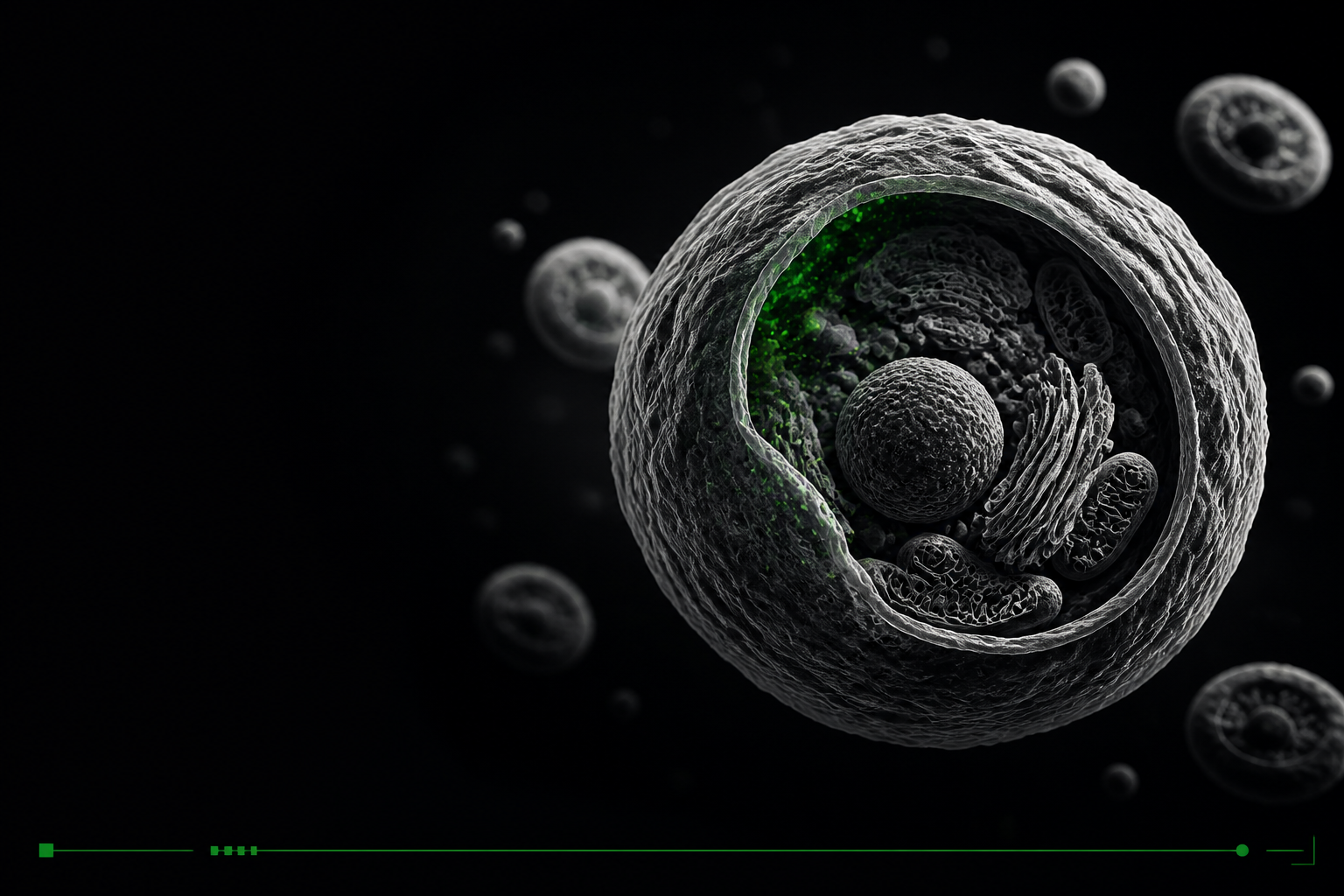
Every cell in the human body contains a sophisticated waste management system known as autophagy. Derived from the Greek for "self-eating," autophagy is the process by which a cell identifies damaged proteins, dysfunctional mitochondria, and other debris, then breaks them down into their constituent parts to be reused as energy or building blocks. This isn't just a maintenance routine; it is a critical survival mechanism that helps the body endure periods of nutrient scarcity.
When autophagy is functioning optimally, it prevents the accumulation of cellular "trash" that can lead to chronic inflammation and metabolic decline. However, in an environment of constant nutrient availability, this process is often suppressed. The modern dietary landscape—characterized by frequent meals and high caloric density—keeps the body in a perpetual state of growth, effectively turning off the recycling switch. This suppression is a factor in the accumulation of "zombie cells," a topic explored in our overview of Senolytics and the Biology of Cellular Clearance.
The molecular switches: mTOR and AMPK
The regulation of autophagy is governed by two primary nutrient sensors that act as a metabolic tug-of-war. The first is mTOR (mammalian target of rapamycin), a protein kinase that promotes cell growth and protein synthesis. When we eat, particularly protein and carbohydrates, mTOR is activated, signaling the cell to build rather than recycle. As long as mTOR is high, autophagy remains largely dormant.
The second player is AMPK (AMP-activated protein kinase), often described as the body's energy sensor. When cellular energy (ATP) is low, AMPK levels rise. AMPK acts as a direct inhibitor of mTOR, essentially signaling that the cell needs to stop growing and start mobilizing internal resources. Achieving the "autophagic threshold" requires a specific metabolic environment where AMPK dominates and mTOR is suppressed.
Nutrient Sensing Pathways
- Insulin/IGF-1: Triggered by carbohydrates and certain proteins; strongly inhibits autophagy.
- Amino Acids (Leucine): The most potent activator of mTOR; even small amounts can pause the recycling process.
- Glucose Levels: High circulating glucose keeps AMPK low, preventing the signal for cellular cleanup.
The Fasting-Mimicking Diet (FMD) framework
While water-only fasting is the most direct way to trigger autophagy, it can be difficult to sustain and may lead to excessive muscle loss or electrolyte imbalances. The Fasting-Mimicking Diet (FMD), pioneered by researchers like Dr. Valter Longo, was developed to solve this problem. The goal of an FMD is to provide a specific ratio of plant-based macronutrients that are low enough in protein and simple sugars to "trick" the body into staying in a fasted state at the cellular level.
By keeping calories low and prioritizing specific fats and complex carbohydrates, the FMD avoids triggering the IGF-1 and mTOR pathways. This allows the individual to consume a small amount of food while maintaining the molecular signals associated with deep fasting. This metabolic state is highly relevant for those tracking Continuous Glucose Monitors for Performance, as the FMD typically leads to a significant reduction in baseline glucose and insulin variability.
| Feature | Water Fasting | Fasting-Mimicking Diet (FMD) | Standard Caloric Restriction |
|---|---|---|---|
| Autophagy Trigger | High | High | Low to Moderate |
| Muscle Preservation | Variable/Low | Moderate to High | High |
| Safety Profile | Requires supervision | Generally safe for most | High |
| mTOR Inhibition | Absolute | Targeted | Partial |
| Duration | 24–72+ hours | Typically 5 days | Continuous |
Mitochondrial turnover and metabolic health
One of the most significant benefits of autophagy is mitophagy—the selective degradation of old or damaged mitochondria. Mitochondria that no longer function efficiently produce high levels of reactive oxygen species (ROS), which can damage DNA and impair cellular energy production. By clearing out these "leaky" powerhouses, the body makes room for the biogenesis of new, healthy mitochondria.
This process is closely linked to Zone 2 Training and Mitochondrial Density, as both interventions aim to optimize the body's energy-producing machinery. While Zone 2 training stimulates the creation of new mitochondria through physical demand, FMD-induced autophagy ensures that the existing mitochondrial pool is high-quality and free of oxidative damage. Together, these strategies enhance metabolic flexibility, allowing the body to switch more efficiently between burning fats and carbohydrates.
Identifying the autophagic threshold
Determining exactly when a human enters a state of deep autophagy is difficult, as there is no simple commercial blood test for cellular recycling. However, researchers look for proxy markers that suggest the body has crossed the threshold. These include a significant drop in circulating IGF-1, an increase in ketones (specifically beta-hydroxybutyrate), and a decrease in blood glucose.
In most clinical FMD protocols, these shifts begin to manifest around day two or three and peak by day five. This timing is crucial because the body needs to stay in the "recession" phase long enough to trigger the clearance of damaged components, but not so long that it begins to break down essential structural tissues. Interestingly, the refeeding phase following an FMD is just as important as the fast itself, as the influx of nutrients triggers stem cell-based regeneration to replace the cleared-out material.
The role of hormonal signaling
Autophagy is not just a localized cellular event; it is coordinated by systemic hormones. Glucagon, the counter-regulatory hormone to insulin, is a potent stimulator of autophagy in the liver. When insulin is low, glucagon rises, signaling the body to mobilize stored energy. This hormonal environment is the polar opposite of the state induced by GLP-1 Receptor Agonists, which are often used to manage glucose by stimulating insulin release in response to food.
Understanding these hormonal levers helps explain why the FMD is structured the way it is. By minimizing protein, the diet avoids the insulin-stimulating effects of amino acids like leucine, ensuring that glucagon remains elevated and the autophagic signal remains strong throughout the five-day cycle.
The reality of periodic recycling
Autophagy is a powerful biological tool, but it is not a state intended for permanent residence. The human body thrives on the oscillation between growth (anabolism) and repair (catabolism). Constant growth leads to the accumulation of cellular damage, while constant catabolism leads to wasting and frailty.
Periodic cycles of a fasting-mimicking diet offer a middle ground. By spending five days every few months in a state of deep cellular repair, individuals may be able to clear out the accumulated debris of modern living without the metabolic stress of chronic restriction. The goal is to maintain a flexible system that is as good at cleaning itself up as it is at building itself back. When combined with adequate Sleep Architecture and Metabolic Health practices, these periodic resets serve as a cornerstone for long-term cellular integrity.
Get the Weekly Research Dispatch
One email each week featuring evidence-based health research, longevity insights, and performance science.
Senolytics and the Biology of Cellular Clearance: A Research Overview
Senescent cells, often called 'zombie cells,' accumulate with age and drive systemic inflammation. Here is what the research says about senolytics and the biology of cellular clearance.

Rapamycin and mTOR: The Most Studied Longevity Lever
Rapamycin is the single most reproducible lifespan-extending compound in the animal literature. A careful read of the mTOR mechanism, the mouse data, the human trials underway, and the open translational questions.

Senolytics in 2026: Where the Aging Research Actually Stands
Senolytics promise to clear the "zombie cells" that drive aging. Here is a comprehensive look at where the research actually stands in 2026 — what is proven, what is promising, and what remains speculative.