Key Takeaways
- Continuous Glucose Monitors (CGMs) provide real-time data on interstitial glucose levels, offering a more dynamic view of metabolic health than a single fasting glucose measurement.
- In non-diabetic populations, CGMs may identify glycemic variability and postprandial spikes that correlate with energy fluctuations and systemic inflammation.
- The technology measures interstitial fluid, not blood; there is a physiological lag of 5–15 minutes between blood glucose changes and sensor readings.
- For athletes, CGMs appear most useful for refining intra-workout fueling strategies and identifying how sleep and stress impair glucose clearance.
- Absolute glucose numbers are less important for performance than the 'area under the curve' and the speed of return to baseline after a meal.
Moving beyond the fasting glucose snapshot
For decades, the gold standard for assessing metabolic health has been the fasting plasma glucose test. While useful for diagnosing pathology, a single morning snapshot provides no information about how the body handles the metabolic challenges of daily life. A person may have a 'normal' fasting glucose of 90 mg/dL but experience massive, prolonged spikes and subsequent crashes after meals—a pattern known as high glycemic variability.
Continuous glucose monitors (CGMs) change this equation by taking readings every few minutes, 24 hours a day. By shifting the focus from a single point to a continuous wave, users can see the immediate impact of specific foods, exercise intensities, and even psychological stress on their fuel supply. This level of granularity is particularly relevant for those focused on Insulin Sensitivity and the Pre-Diabetic Window Most People Miss, as it allows for the detection of subtle metabolic shifts years before they manifest in standard blood work.
The physiology of interstitial monitoring
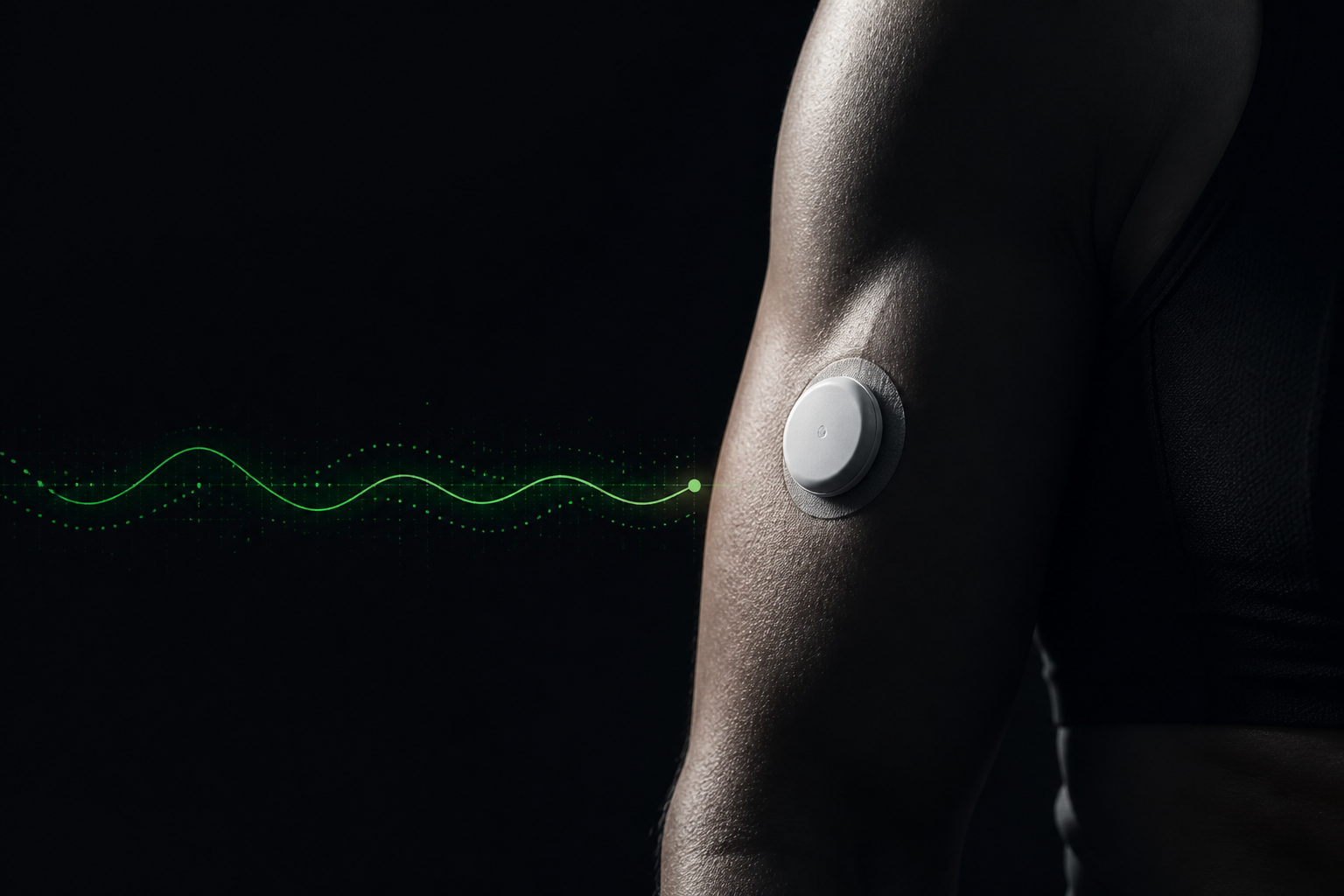
It is vital to understand that a CGM does not measure blood glucose directly. The sensor filament sits in the interstitial fluid—the fluid surrounding your cells. Glucose moves from the capillaries into the interstitial space, creating a natural delay. During periods of rapid change, such as high-intensity sprints or a high-sugar meal, the CGM reading may lag behind your actual blood glucose by up to 15 minutes.
This lag is generally negligible for long-term health tracking, but it matters for performance timing. If an athlete uses a CGM to time their 'fueling window,' they must account for this offset. Furthermore, factors like dehydration or pressure on the sensor (compression lows) can occasionally produce 'noisy' data that requires skeptical interpretation.
Practical sources of sensor noise worth ruling out before trusting a reading:
- Compression lows — sleeping on the sensor restricts local blood flow and can register a false drop.
- Dehydration — reduced interstitial fluid volume can distort readings during long sessions.
- Sensor warm-up — the first 12–24 hours after insertion are typically the least reliable.
- Rapid-change windows — during sprints or a high-sugar meal, the 5–15 minute lag makes single readings misleading.
Glycemic variability and the performance ceiling
In the context of performance, the goal is not necessarily to have the lowest glucose possible, but rather the most stable glucose. Large swings in blood sugar are associated with oxidative stress and transient cognitive fatigue. When glucose spikes and the body over-responds with insulin, a 'hypoglycemic crash' can occur, leading to the familiar feeling of a mid-afternoon slump or a sudden loss of power during a workout.
| Metric | Definition | Performance Relevance |
|---|---|---|
| Time in Range (TIR) | Percentage of day spent between 70–110 mg/dL | High TIR correlates with stable energy and better mood regulation. |
| Glycemic Variability | The frequency and magnitude of glucose swings | Lower variability is associated with reduced systemic inflammation. |
| Postprandial Peak | The highest glucose level reached after a meal | Helps identify which carbohydrate sources cause excessive insulin demand. |
| Return to Baseline | Time taken to return to pre-meal levels | A proxy for metabolic flexibility and insulin efficiency. |
Monitoring these metrics allows for a more nuanced approach to Zone 2 Training and Mitochondrial Density. For example, data may show that a specific athlete maintains better glucose stability during long aerobic sessions when using specific starch-based fuels versus simple sugars.
The impact of sleep and stress on glucose
One of the most surprising insights for non-diabetic CGM users is how much non-nutritional factors influence blood sugar. A single night of restricted sleep can significantly impair glucose tolerance the following day, making a meal that usually causes a mild rise result in a much higher spike. This is largely driven by elevated cortisol, which signals the liver to release stored glucose into the bloodstream to prepare for a perceived threat.
Similarly, intense psychological stress can cause glucose to rise even in the absence of food. By observing these patterns, individuals can better understand the systemic load they are carrying. When paired with recovery metrics like Heart Rate Variability, CGM data provides a multi-dimensional view of how the body is responding to its environment.
Non-nutritional inputs that commonly show up in the data:
- Short sleep — a single restricted night can measurably impair next-day glucose tolerance.
- Psychological stress — cortisol signals hepatic glucose release even with no food involved.
- Training load — glucose that stays elevated long after a session may reflect lingering sympathetic drive.
- Caffeine timing — a fasted morning coffee can produce a modest rise before the first meal.
Fueling the work required
CGMs allow athletes to move away from generic fueling guidelines and toward 'fueling the work required.' High-intensity training requires glucose; attempting to maintain a flat glucose line during a track session is counterproductive. The value lies in seeing how quickly the body recovers from that excursion. If glucose remains elevated for hours after a workout ends, it may suggest that the autonomic nervous system is still in a highly sympathetic state, hindering the transition to a reparative, parasympathetic mode.
Avoiding the trap of glucose perfectionism
There is a risk in the performance community of becoming overly fixated on 'flattening the curve.' Glucose spikes are a normal physiological response to eating carbohydrates and performing high-intensity exercise. The body is designed to handle these excursions through insulin secretion and muscle uptake.
Problems arise when the spikes are chronic, excessive, and poorly managed. The objective of using a CGM in a non-diabetic context should be to identify 'big wins'—such as realizing that a specific 'healthy' snack causes a disproportionate glucose surge—rather than obsessing over every 5 mg/dL fluctuation. Like Sleep Architecture, glucose management is a long-term project of marginal gains, not a daily test to be 'aced.'
The honest summary of CGM utility
Continuous glucose monitoring offers a powerful window into the metabolic 'black box' of the human body. For the non-diabetic user, its primary value is educational: it reveals the hidden impact of sleep, stress, and specific food combinations on energy availability. It is a tool for building intuition, not a permanent leash.
While the technology is still evolving, the current evidence suggests that reducing glycemic variability is a valid strategy for improving energy stability and long-term metabolic health. When used as one piece of a broader physiological puzzle, the CGM helps bridge the gap between how we feel and what is actually happening at the cellular level. The goal isn't just a lower number—it's a more resilient and flexible metabolic system.
Get the Weekly Research Dispatch
One email each week featuring evidence-based health research, longevity insights, and performance science.
Continuous Glucose Monitors for Performance: Signal vs. Noise in Non-Diabetics
Continuous glucose monitors (CGMs) are migrating from clinical diabetes care to the performance community. Here is what the research says about tracking blood sugar for metabolic health.
GLP-1 Receptor Agonists and Metabolic Flexibility: Beyond Weight Loss
GLP-1 receptor agonists are often viewed solely through the lens of weight loss. Here is how these peptides may fundamentally alter metabolic flexibility and cellular fuel partitioning.
Sleep Architecture and Metabolic Health: The Deep Sleep-Insulin Connection
One night of poor sleep can induce insulin resistance comparable to months of a high-fat diet. Here is how sleep architecture and deep sleep cycles govern your metabolic health.