Key Takeaways
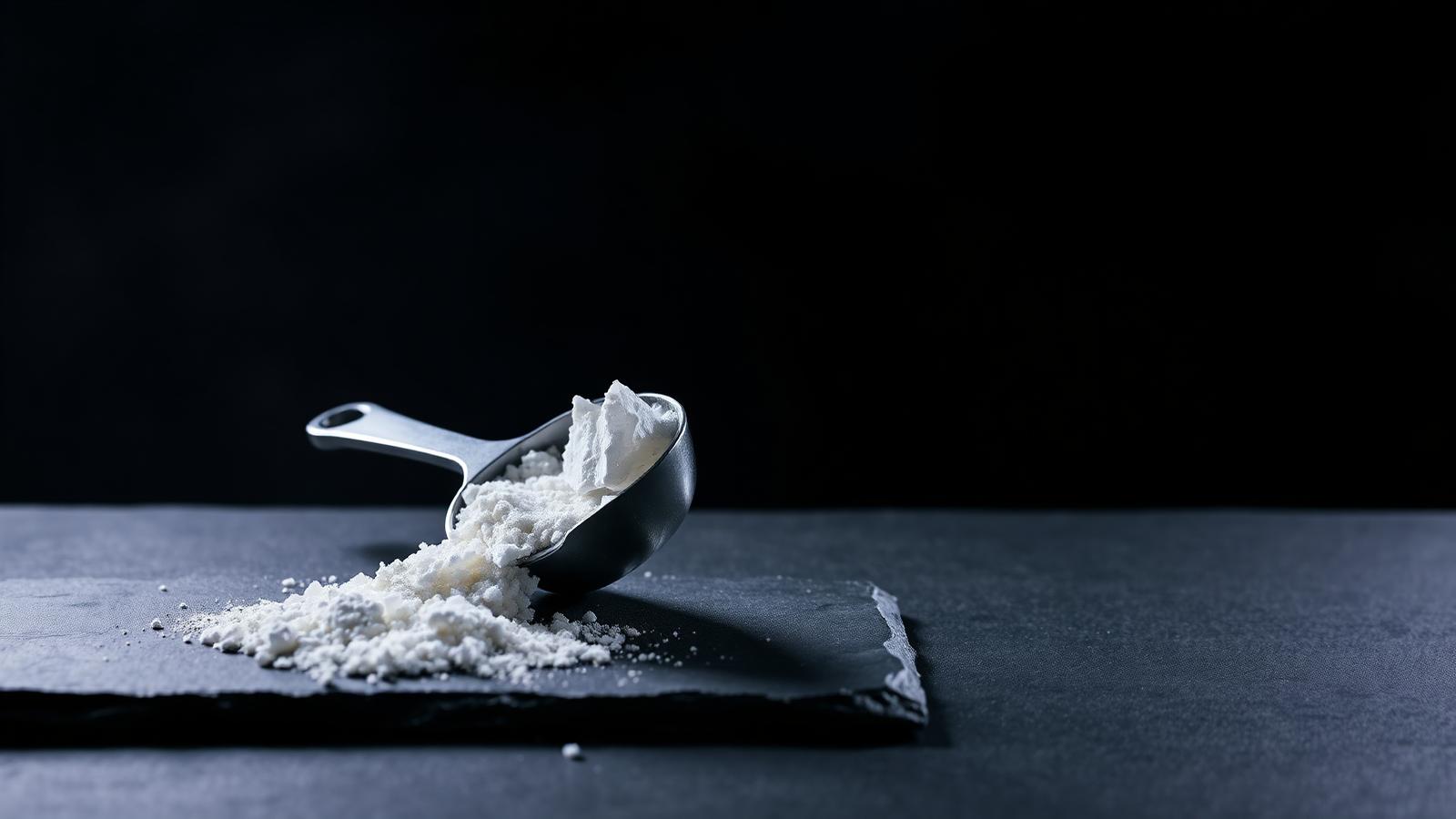
- Creatine is a naturally occurring molecule that buffers cellular ATP by regenerating it from ADP through the phosphocreatine system. Every tissue with high energy turnover uses it.
- The muscular effects (strength, power, hypertrophy support) are well established. The more interesting frontier is cognitive, neurological, and cellular-energy research.
- Effect sizes on cognition are largest under high metabolic demand — sleep deprivation, hypoxia, sustained mental load, aging brain.
- Creatine monohydrate remains the gold standard: cheapest, most-studied, best-characterized, and equivalent or superior to every marketed alternative form.
- Standard dosing (3–5 g/day, indefinitely) has an excellent safety profile across decades of use; higher doses (~10 g/day) are being explored for neurological indications.
The molecule that powers the first ten seconds
Creatine's biochemistry is elegant. ATP is the direct energy currency of the cell, but the intracellular ATP pool is small — enough for roughly two seconds of maximal muscular work. Sustained output requires ATP regeneration, and the fastest regeneration system available is the creatine kinase reaction, which transfers a phosphate from phosphocreatine to ADP to reform ATP.
This system dominates the first ~10 seconds of maximal effort and remains a substantial contributor for the first 30 seconds. It is the reason a sprinter, a powerlifter, and a fighter throwing a hard combination all draw on the same underlying buffer.
Any tissue with high energetic turnover — skeletal muscle, brain, cardiac muscle, retina — uses the same system. That is where the "beyond the gym" story begins.
The brain uses a lot of creatine
The human brain is roughly 2% of body mass and consumes about 20% of resting metabolic energy. Neurons rely on rapid ATP regeneration to sustain membrane potentials, synaptic activity, and vesicle recycling. Brain tissue synthesizes some of its own creatine and imports the rest across the blood-brain barrier through the CT1 transporter.
Two experimental strategies have illuminated the brain's dependence on creatine:
- Creatine deficiency syndromes. Rare genetic disorders that impair creatine synthesis or transport cause severe intellectual disability, epilepsy, and movement disorders — establishing that adequate brain creatine is not optional for normal cognition.
- Loading studies in healthy adults. Supplementation raises brain phosphocreatine measurable on magnetic resonance spectroscopy, particularly in vegetarians and older adults whose baseline stores are lower (Dechent et al., 1999).
Cognitive effects: what the research actually shows
The cognitive literature is genuinely interesting but often overstated. A useful summary:
| Context | Effect on cognition | Notes |
|---|---|---|
| Rested, healthy young adults | Small or null | Baseline stores already near ceiling |
| Sleep-deprived adults | Meaningful improvement in executive function | Well-replicated |
| Vegetarians / vegans | Larger baseline effect than omnivores | Lower dietary intake |
| Older adults | Improvement in memory and processing speed | Meta-analytic support |
| Traumatic brain injury (pediatric) | Improvement in recovery trajectories | Small trials |
| Depression (adjunct) | Emerging positive signal | Recent RCTs |
A 2022 meta-analysis found consistent cognitive benefits in older adults and modest benefits in specific stress states (Prokopidis et al., 2022). The healthy-well-rested young adult population is where effects are smallest and where much of the "creatine doesn't work for brains" narrative comes from.
Depression and mood: the emerging story
The most interesting new frontier is affective. Several small trials have suggested that creatine, added to standard antidepressant therapy, accelerates and augments response — particularly in female patients (Lyoo et al., 2012). The mechanistic hypothesis is bioenergetic: depressed brains show reduced ATP turnover in mood-relevant regions, and creatine may buffer that deficit.
This is early-stage research. It is not a reason to substitute creatine for evaluated depression treatment. It is a reason to take the cellular-energy framework of mood disorders more seriously than it has historically been taken.
Muscular effects: the well-established chapter
For completeness, the resistance-training and power literature is essentially settled:
- Creatine supplementation increases lean mass by ~1–2 kg over 4–12 weeks in most adults, partly from intracellular water and partly from actual protein accretion via increased training volume tolerance.
- Strength and power outputs improve by ~5–15% relative to placebo across dozens of trials.
- The effect is dose-independent above ~3–5 g/day; a loading phase accelerates but is not required.
See The Hypertrophy Equation for how creatine fits into the broader training-adaptation framework.
Forms and dosing
Creatine monohydrate has been the gold standard for three decades. Marketed alternatives (creatine ethyl ester, buffered creatine, creatine HCl, magnesium chelate) have not demonstrated superiority in head-to-head trials and cost significantly more per gram.
| Form | Evidence base | Practical assessment |
|---|---|---|
| Monohydrate | Extensive | Gold standard; cheap; well-tolerated |
| Ethyl ester | Poor | Degrades to creatinine; do not use |
| HCl | Limited | Solubility advantage; no efficacy advantage |
| Buffered ("Kre-Alkalyn") | Poor | Not superior to monohydrate in RCTs |
| Micronized monohydrate | Same as monohydrate | Better mixability; no other advantage |
Standard dosing:
- Maintenance: 3–5 g/day, indefinitely, with or without food.
- Loading (optional): 20 g/day split into 4 doses for 5–7 days to saturate stores faster.
- Neurological research doses: 10–20 g/day are being explored in some trials; not the standard recommendation for general use.
Safety and side effects
Creatine has one of the strongest safety records in the supplement literature. Concerns worth addressing:
- Kidney function. In individuals with normal baseline renal function, standard-dose creatine does not adversely affect kidneys across long-term studies. Serum creatinine (the byproduct) rises modestly, which can falsely suggest kidney dysfunction on standard labs — a lab artifact, not disease.
- Hair loss. A single 2009 study reported an increase in DHT with creatine in a small rugby cohort; the finding has not been replicated. The absolute effect on hair loss remains unproven.
- Gastrointestinal. High single doses can cause GI upset; splitting the dose resolves this.
- Water retention. Intracellular, not subcutaneous. Not the same as "bloating."
Current Evidence
| Domain | State of the field | Confidence |
|---|---|---|
| Strength / power performance | Extensively replicated | High |
| Lean mass support with resistance training | Extensively replicated | High |
| Cognition under stress or sleep deprivation | Multiple RCTs, meta-analysis | High |
| Cognition in older adults | Meta-analytic support | High |
| Cognition in well-rested young adults | Small / null | Moderate (against) |
| Depression adjunct | Emerging, positive signal | Moderate |
| Neurological injury recovery | Small trials, promising | Low–Moderate |
| Long-term safety | Decades of data | High |
Editorial Perspective
Creatine is the closest thing the supplement industry has to a settled science story, which makes it a useful benchmark for how the rest of the space should be evaluated. Three points worth holding:
First, the muscular effect is real and modest — not transformative. The people who report the largest subjective changes are usually people who were previously undertrained; the compound helps them train more productively, and the training does most of the work.
Second, the cognitive effects are real but context-dependent. Someone sleeping seven-plus hours, eating adequate protein, and doing regular aerobic work should not expect a large cognitive change from adding creatine. Someone on shift work, sleep-restricted, or over 60 has more to gain.
Third, the depression and neuroprotection literature is where the interesting frontier is. That is a story about brain energetics as a modulator of mood and cognition — and it is bigger than any single supplement. Creatine is a useful probe into that framework because it is cheap, safe, and well-tolerated. The correct posture is to follow the trials, not to overclaim from the preliminary signal.
Future Research Directions
- Larger, longer-duration RCTs of creatine as an adjunct in unipolar and bipolar depression.
- Standardized dosing protocols for post-concussion and TBI recovery in adults.
- Interaction between creatine, sleep, and cognitive resilience in shift-work populations.
- Combined creatine and mitochondrial-support interventions in age-related cognitive decline.
- Sex-based differences in dosing response, particularly in depression trials.
FAQ
Do I need to load creatine? No. Loading (20 g/day for 5–7 days) saturates stores faster; a standard 3–5 g/day dose reaches the same saturation in ~3–4 weeks.
Should I take creatine on non-training days? Yes. Muscular and neural creatine stores maintain saturation with daily intake regardless of training schedule.
Does creatine cause hair loss? The evidence is one small unreplicated study showing a DHT change. There is no direct evidence of increased hair loss in humans. The concern is not zero, but it is far weaker than the internet suggests.
Does creatine damage the kidneys? In individuals with normal baseline renal function, no. Serum creatinine rises modestly as a metabolic byproduct — this is a lab artifact, not evidence of harm. Individuals with pre-existing kidney disease should discuss with a clinician.
Is creatine safe long-term? Yes. Studies over 5+ years and observational data over decades show no adverse safety signal at standard doses.
Do vegetarians benefit more from creatine? Yes, on average. Vegetarian diets provide essentially no dietary creatine, so baseline muscle and brain stores are lower and the loading effect is larger.
Does creatine help with mental fatigue? The evidence is strongest under high metabolic demand: sleep deprivation, sustained cognitive load, aging. In a well-rested young adult, the effect is small.
When should I take creatine — before or after workouts? Timing does not meaningfully change the result. Daily consistency matters; time of day does not.
Get the Weekly Research Dispatch
One email each week featuring evidence-based health research, longevity insights, and performance science.
References
- Dechent P et al. Increase of total creatine in human brain after oral supplementation of creatine-monohydrate. Am J Physiol. 1999;277(3):R698-704. PubMed
- Prokopidis K et al. Effects of creatine supplementation on memory in healthy individuals: a systematic review and meta-analysis of randomized controlled trials. Nutr Rev. 2022;81(4):416-427. PubMed
- Lyoo IK et al. A randomized, double-blind placebo-controlled trial of oral creatine monohydrate augmentation for enhanced response to a selective serotonin reuptake inhibitor in women with major depressive disorder. Am J Psychiatry. 2012;169(9):937-945. PubMed
- Rae C et al. Oral creatine monohydrate supplementation improves brain performance: a double-blind, placebo-controlled, cross-over trial. Proc Biol Sci. 2003;270(1529):2147-2150. PubMed
- Kreider RB et al. International Society of Sports Nutrition position stand: safety and efficacy of creatine supplementation in exercise, sport, and medicine. J Int Soc Sports Nutr. 2017;14:18. PubMed
- Roschel H et al. Creatine supplementation and brain health. Nutrients. 2021;13(2):586. PubMed
Further reading

Zone 2 Training and Mitochondrial Density: The Science of Metabolic Efficiency
Zone 2 training is often dismissed as 'junk miles,' yet it is the primary driver of mitochondrial biogenesis and metabolic flexibility. Here is how the physiology actually works.
Heart Rate Variability: The Physiology of the Autonomic Stress Signal
HRV is a non-invasive window into the autonomic nervous system. Learn how to interpret the fluctuations between heartbeats to optimize training and manage systemic stress.
Heart Rate Variability: What It Measures and What It Misses
HRV is one of the most useful — and most misinterpreted — recovery metrics available. Here is a comprehensive look at what it measures, what it does not, and how to actually use it.